
12 Dining Room Ideas for Warm Gatherings
The dining room is where life’s most meaningful moments happen — shared meals, loud laughter, and quiet conversations. Dining room ideas that create warmth and beauty make every gathering feel more special. Whether your space is big or small, these ideas will help you design a dining room your family and guests will love.
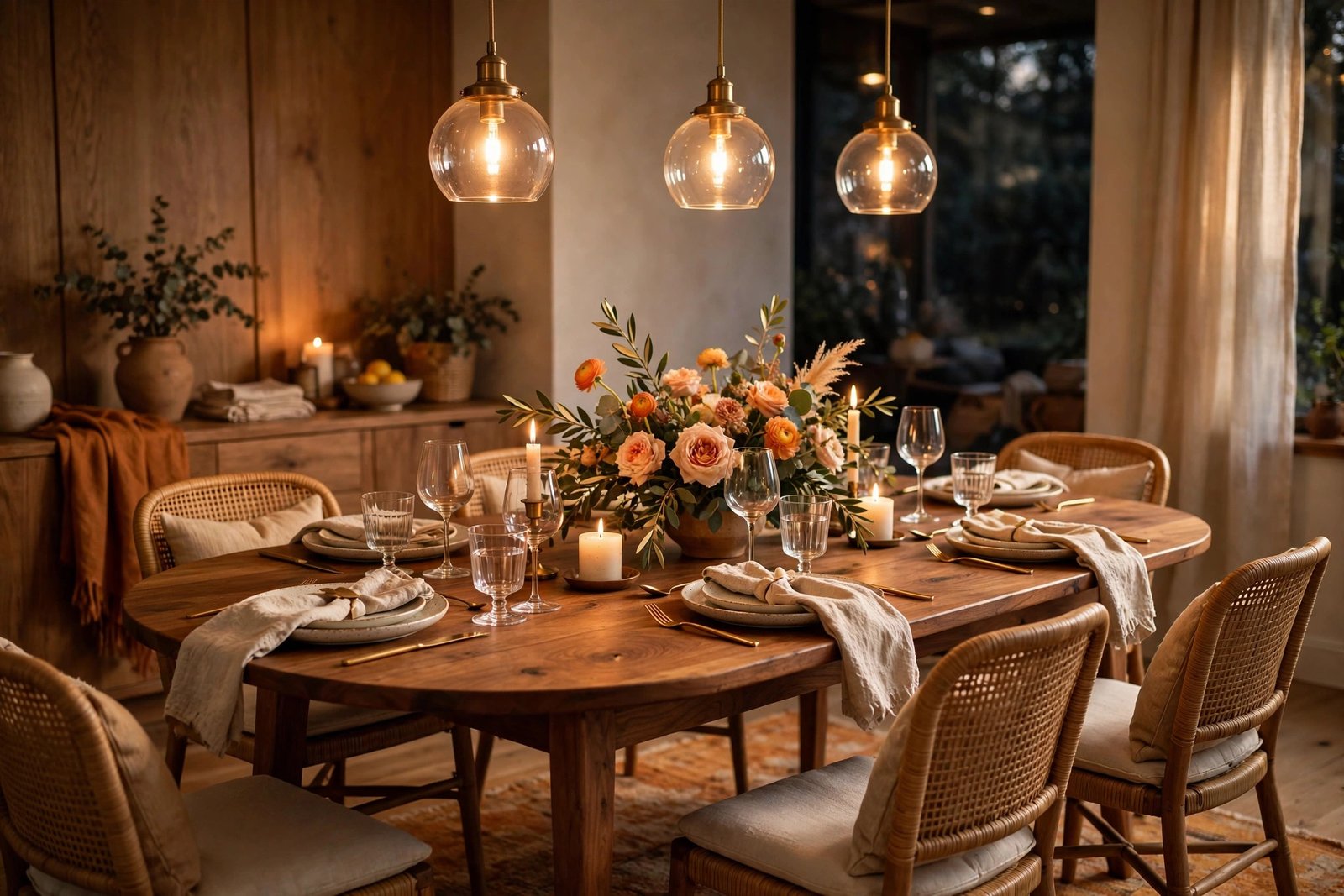
Great dining room ideas go beyond choosing a table and chairs. They consider lighting, texture, color, and the little personal touches that make guests feel at home. A well-designed dining room sets the mood for every meal — from busy weeknight dinners to long, leisurely Sunday lunches. Here are twelve beautiful and practical ideas to transform your dining space into a warm, inviting gathering place.
Dining Room Ideas Start With Choosing the Right Table
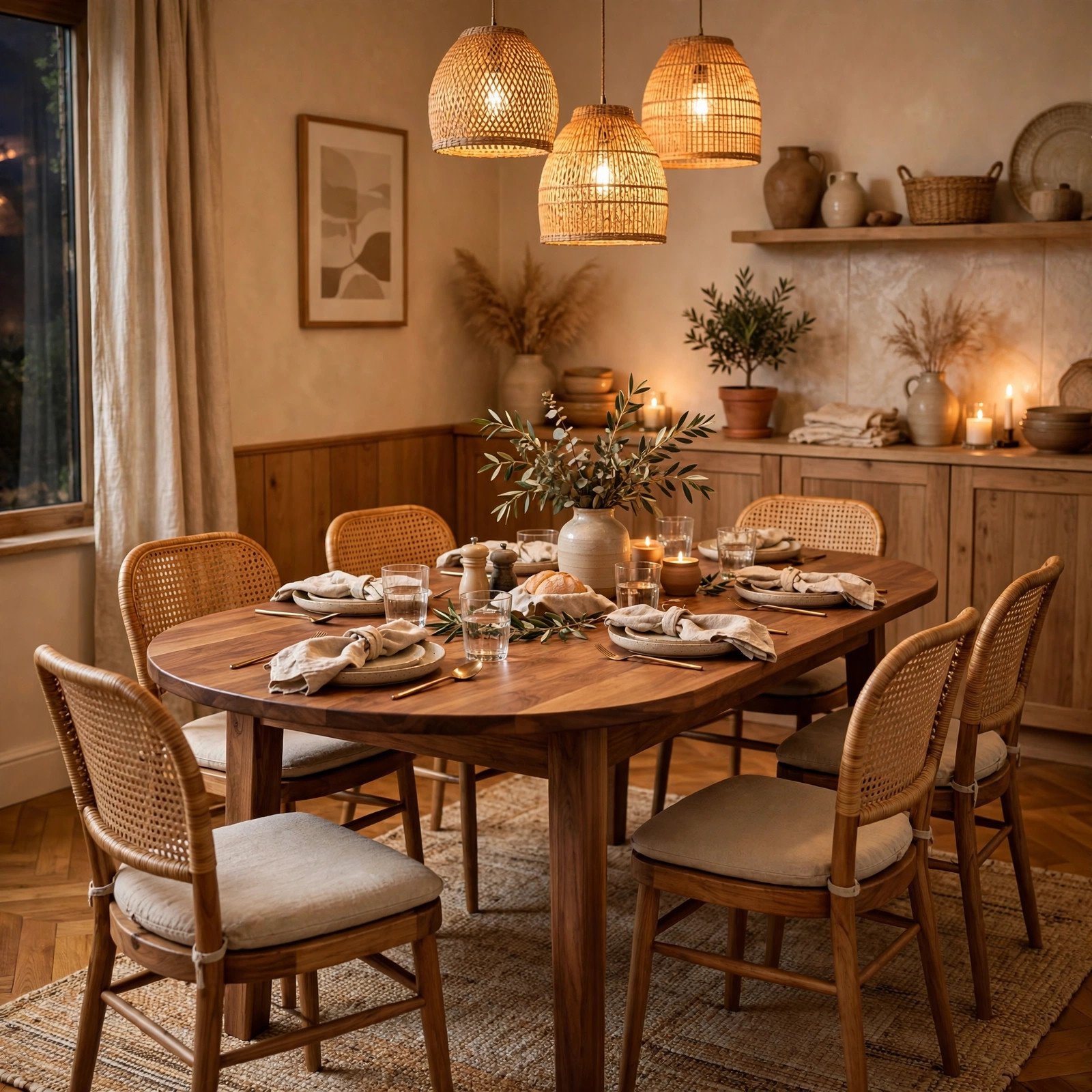
Your dining table is the anchor of the entire room. It sets the tone for everything else — the chairs, the lighting, and the overall atmosphere. First of all, choose a table size that fits your space comfortably. A table that is too large makes movement difficult. One that is too small feels cramped during gatherings.
Furthermore, the shape of your table matters more than most people realize. Round and oval tables encourage conversation because everyone faces each other. Rectangular tables work well for larger families and more formal settings. An oval table is the most versatile dining table shape. It fits more guests than a round one and feels softer than a rectangle.
In particular, solid wood tables in walnut, oak, or acacia bring natural warmth and durability to the dining room. They age beautifully and develop character over years of family use.
- Choose a dining table that leaves at least 90cm of clear walking space between the table edge and the nearest wall or furniture piece.
- Consider an extendable dining table if you host large gatherings occasionally. It saves space daily but expands when you need it most.
- Opt for a solid wood table over MDF or glass. It is more durable, warmer in appearance, and adds natural texture to the dining room.
Mix Chair Styles for an Effortlessly Curated Look
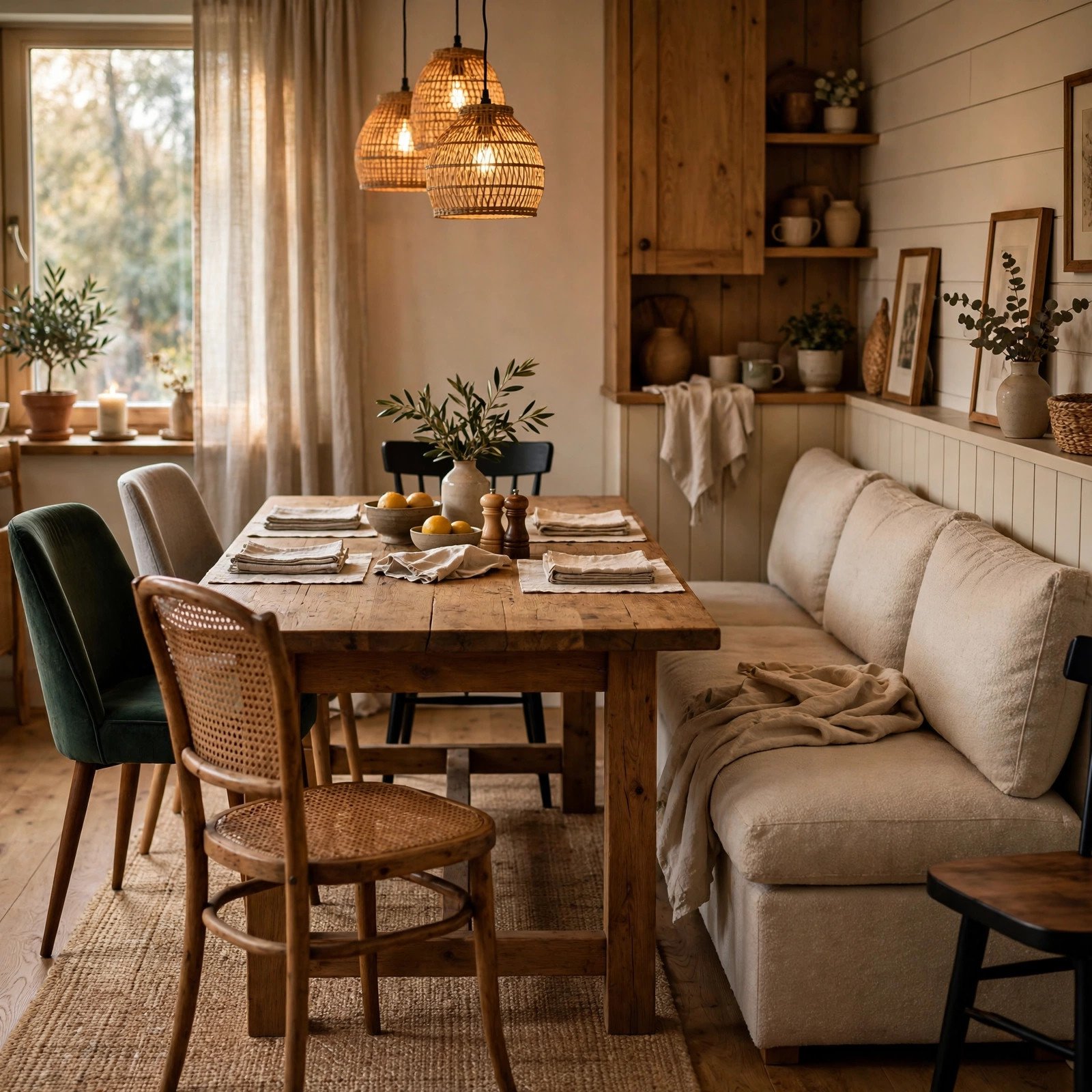
Matching dining chairs are safe — but mixed seating is far more interesting. Pairing wooden side chairs with an upholstered bench on one side creates a relaxed, layered look. Moreover, mixing two chair styles in complementary materials adds personality without creating visual chaos.
Similarly, adding a bench along one side of the table is both practical and stylish. Benches accommodate more guests during large gatherings. They also add a casual, relaxed energy that makes people feel immediately at ease. Pairing two upholstered armchairs at the head of the table gives the dining room a sense of occasion and natural focal points.
Beyond that, chair cushions in linen, velvet, or boucle add softness and texture to wooden chairs. This simple addition makes long dinner parties far more comfortable for your guests.
- Mix two chair styles — wooden side chairs and one upholstered design. This creates an eclectic, curated dining room look without visual confusion.
- Add a bench along one side of your dining table to increase seating capacity during gatherings while adding a relaxed, casual atmosphere.
- Place tie-on cushions in linen or velvet on wooden dining chairs to improve comfort during long meals and add a soft textile layer to the room.
Layer Lighting to Create the Perfect Dining Atmosphere
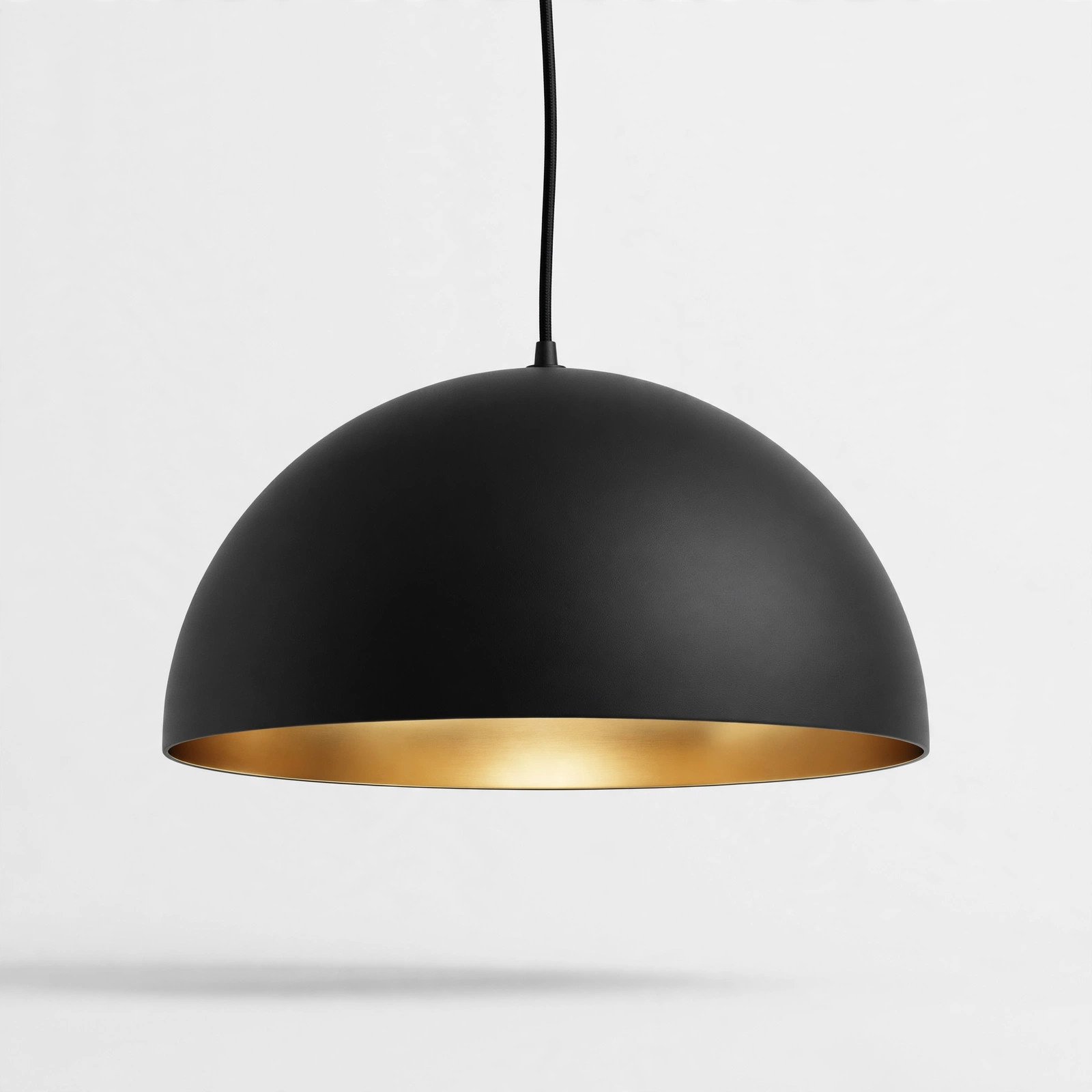
Lighting transforms a dining room more than almost any other element. A statement pendant lamp hung directly above the dining table creates an instant focal point. Furthermore, it pools warm light over the table surface and makes food and faces look beautiful during meals.
Therefore, hang your pendant light at the right height — approximately 75 to 90cm above the table surface. Too high and the light feels disconnected. Too low and it becomes a visual barrier. Installing a dimmer switch on your dining room pendant light is the single most impactful upgrade. It creates flexible, mood-appropriate atmosphere at any meal.
In addition, wall sconces or a sideboard lamp add a secondary layer of warm ambient light. Together, layered lighting creates a dining room that feels intimate and inviting at any hour.
- Hang your pendant lamp 75 to 90cm above your dining table surface for the most balanced, visually connected light placement.
- Install a dimmer switch on all dining room lights so you can shift from bright functional lighting to soft, intimate dinner ambiance instantly.
- Add a sideboard lamp or wall sconces to create a warm secondary light layer that makes the dining room feel cozy and intentionally designed.
💾 Loving these ideas? Save this post so you can come back to it later!
Style a Beautiful Table Setting for Every Occasion
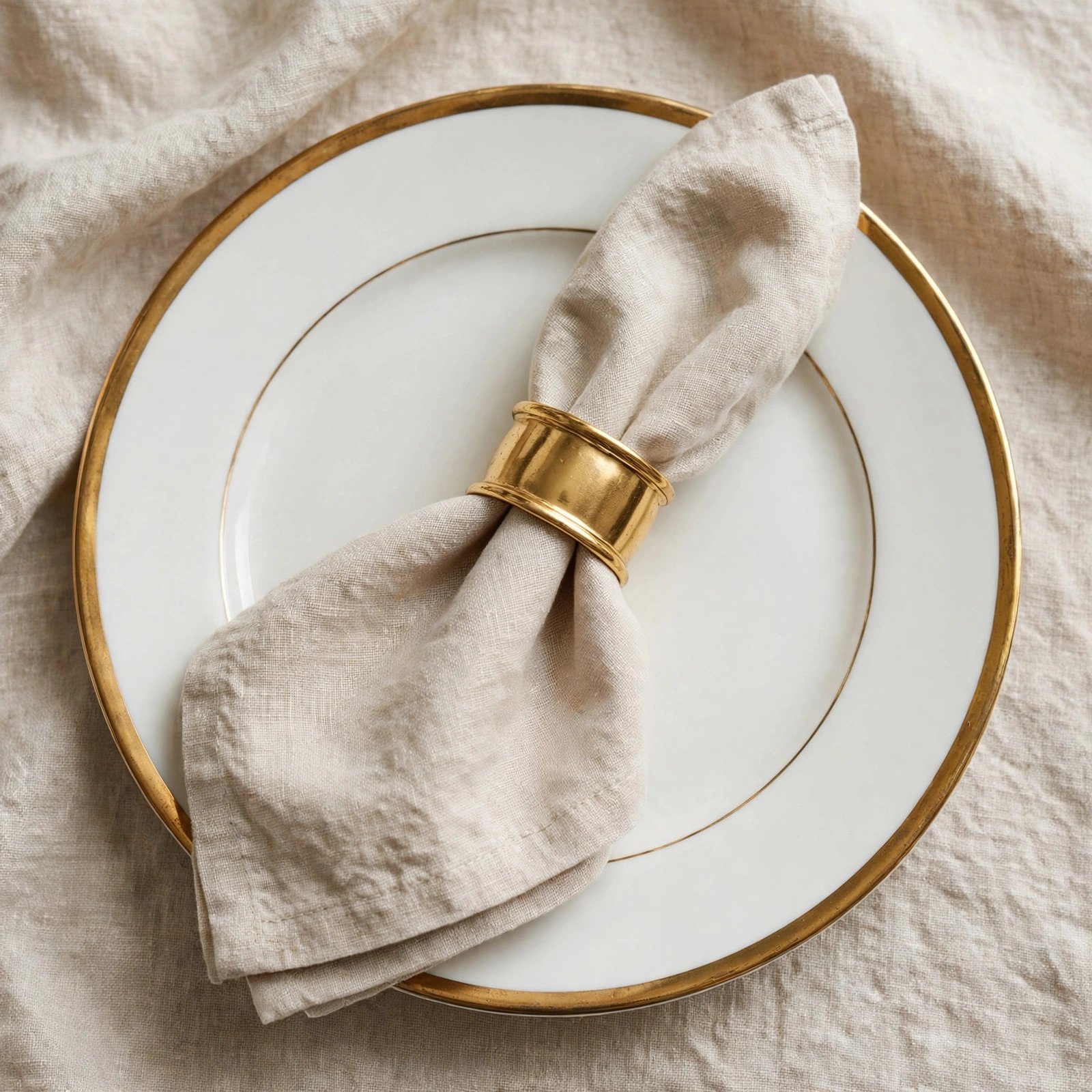
A beautifully styled table makes every meal feel like an occasion. You do not need expensive china or elaborate decorations. Simple linen napkins, mismatched vintage plates, a small candle, and a few stems in a vase create a table setting. It feels thoughtful and personal.
What’s more, layering your table setting adds visual richness. Start with a linen or cotton table runner as your base. Add a charger plate beneath the dinner plate for a more formal look. Using cloth napkins instead of paper napkins immediately elevates any table setting. Fold them simply and tie with a sprig of rosemary for a beautiful finishing touch.
As a result, your dining table becomes a place people want to gather around before the food even arrives. The styling sets an intention — this meal matters, and so do the people sharing it.
- Use a natural linen table runner as your base layer and build your table setting on top of it for an elegant, cohesive look every time.
- Fold cloth napkins and place them in the wine glass or tied with twine and a small sprig of herbs for a simple, beautiful finishing detail.
- Keep a set of mismatched vintage plates for casual gatherings. The eclectic mix looks charming and collected rather than mismatched or careless.
Create a Centrepiece That Sparks Conversation
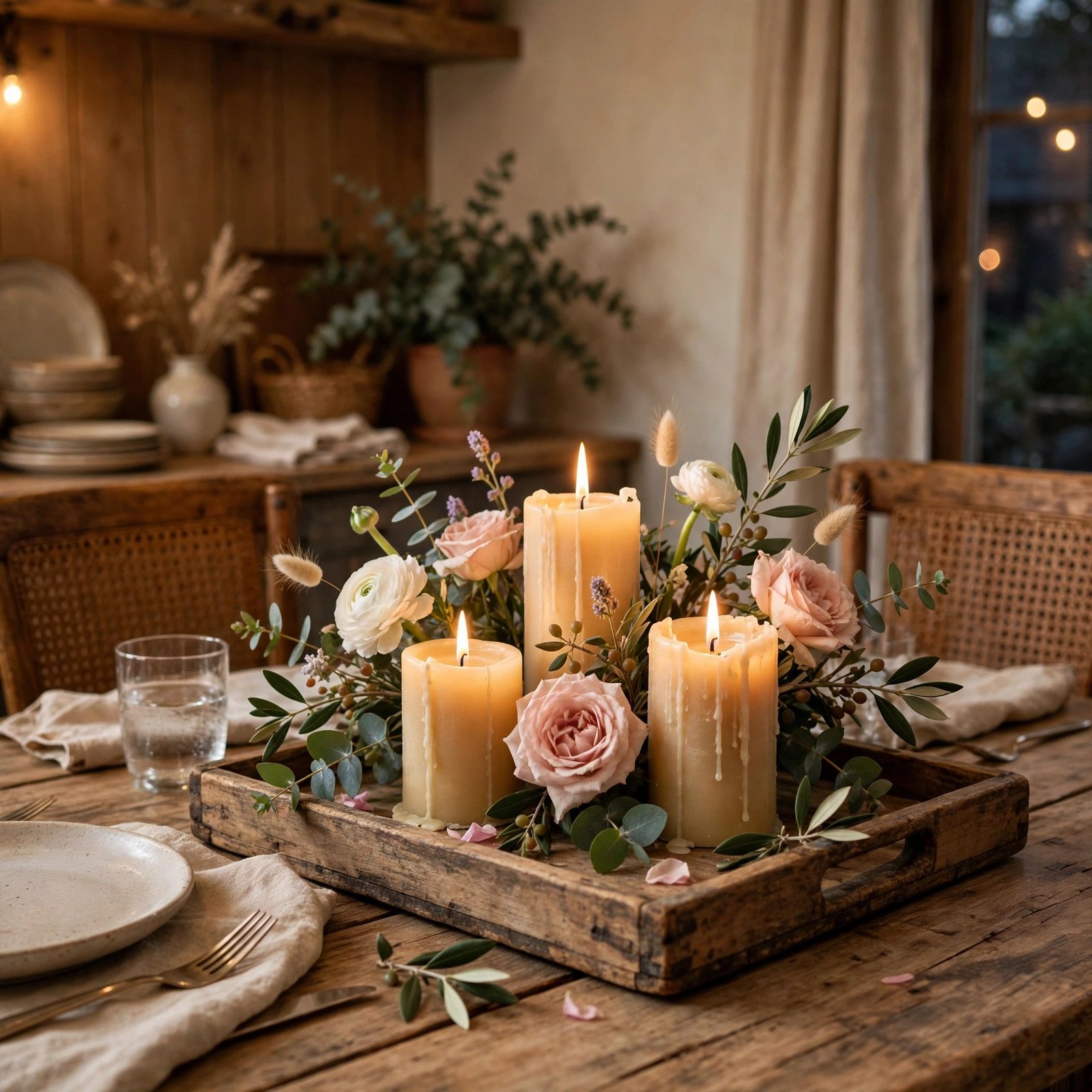
A great centrepiece does two things. It looks beautiful and stays low enough for guests to talk across the table. Tall floral arrangements block sightlines and interrupt conversation. Therefore, keep your centrepiece under 30cm in height for the most socially friendly dining table display.
Moreover, centrepieces do not have to be flowers. A cluster of candles in varying heights on a wooden tray makes a stunning focal point. A bowl of seasonal fruit, small potted herbs, or bud vases with single stems work beautifully too. A simple row of three bud vases with single stems looks effortlessly elegant. It is the easiest dining table centrepiece you can create.
In addition, change your centrepiece with the seasons. This one small update makes your dining room feel fresh and intentionally decorated throughout the year without any major changes.
- Keep your dining table centrepiece under 30cm tall. It will never block conversation or sightlines between guests seated across from each other.
- Try three bud vases of different heights with single stems. Eucalyptus, dried pampas, or seasonal flowers make a simple and elegant centrepiece.
- Use a wooden tray to group your centrepiece objects. Candles, vases, and small objects will feel contained and intentionally styled.
Add Warmth With a Statement Rug Under the Table
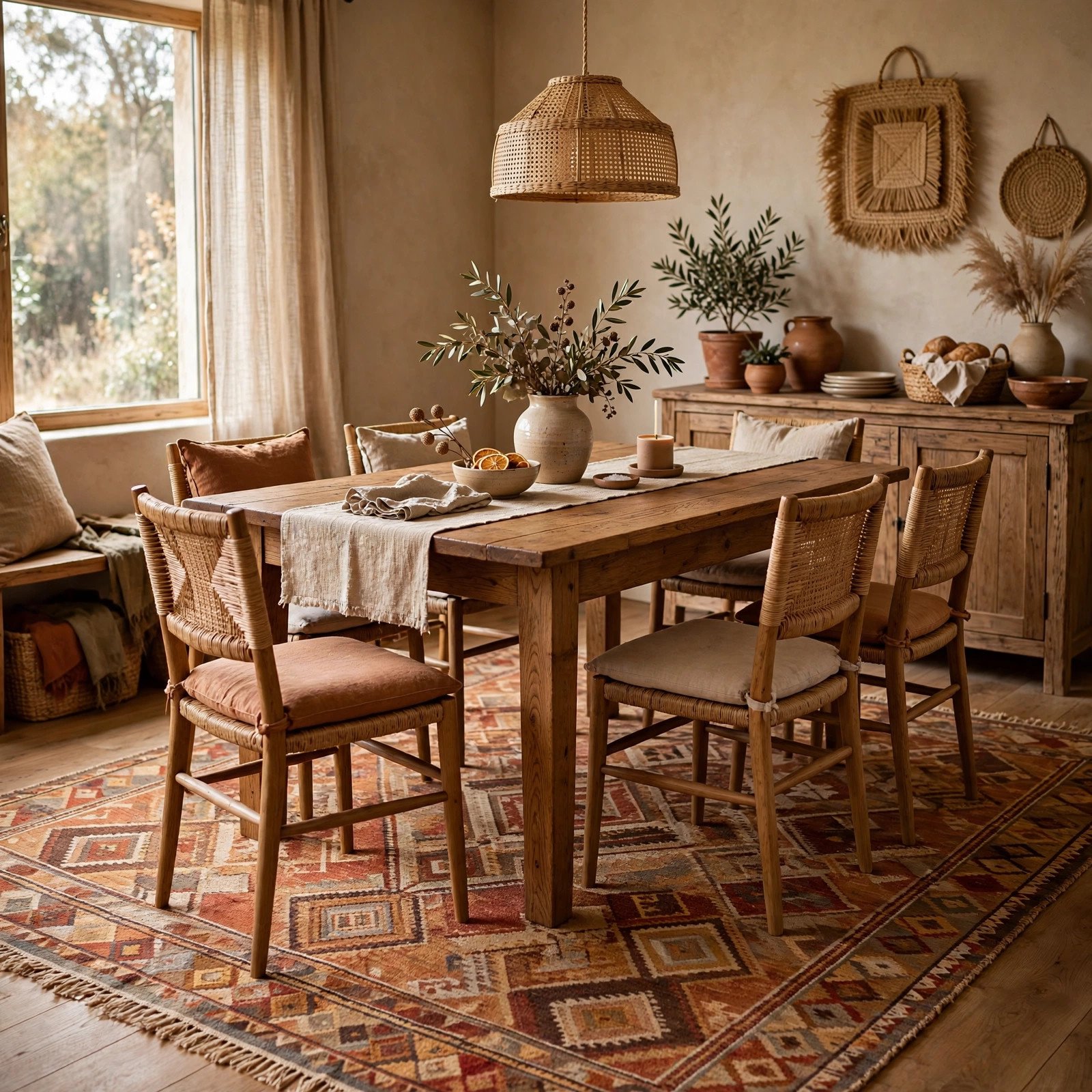
A rug under the dining table is one of the most underrated design moves you can make. It defines the dining zone, adds warmth underfoot, and introduces color and texture to a space that can easily feel cold and hard. Furthermore, it makes the dining table feel anchored and purposefully placed rather than floating in the room.
Therefore, choose a rug that is large enough for all chair legs to sit on the rug. This holds true even when chairs are pulled out. A rug that is too small makes the room look awkward. As a rule, add at least 60cm to each side of your table when measuring for your rug. A flat-weave or low-pile rug in a dining room is always more practical than a high-pile one. Crumbs and spills are far easier to clean.
In addition, warm tones like rust, caramel, terracotta, and cream work beautifully in a dining room. They complement wooden furniture and create an inviting, cozy atmosphere.
- Choose a rug that extends at least 60cm beyond each side of your dining table so chair legs stay on the rug when pulled out during a meal.
- Select a flat-weave or low-pile rug for the dining room. It is far easier to clean after meals and holds up better under constant chair movement.
- Use a rug in warm tones — terracotta, caramel, or cream — to complement wooden furniture and add a cozy, grounding layer to the dining room floor.
Bring in Plants and Greenery for a Fresh, Lively Dining Space
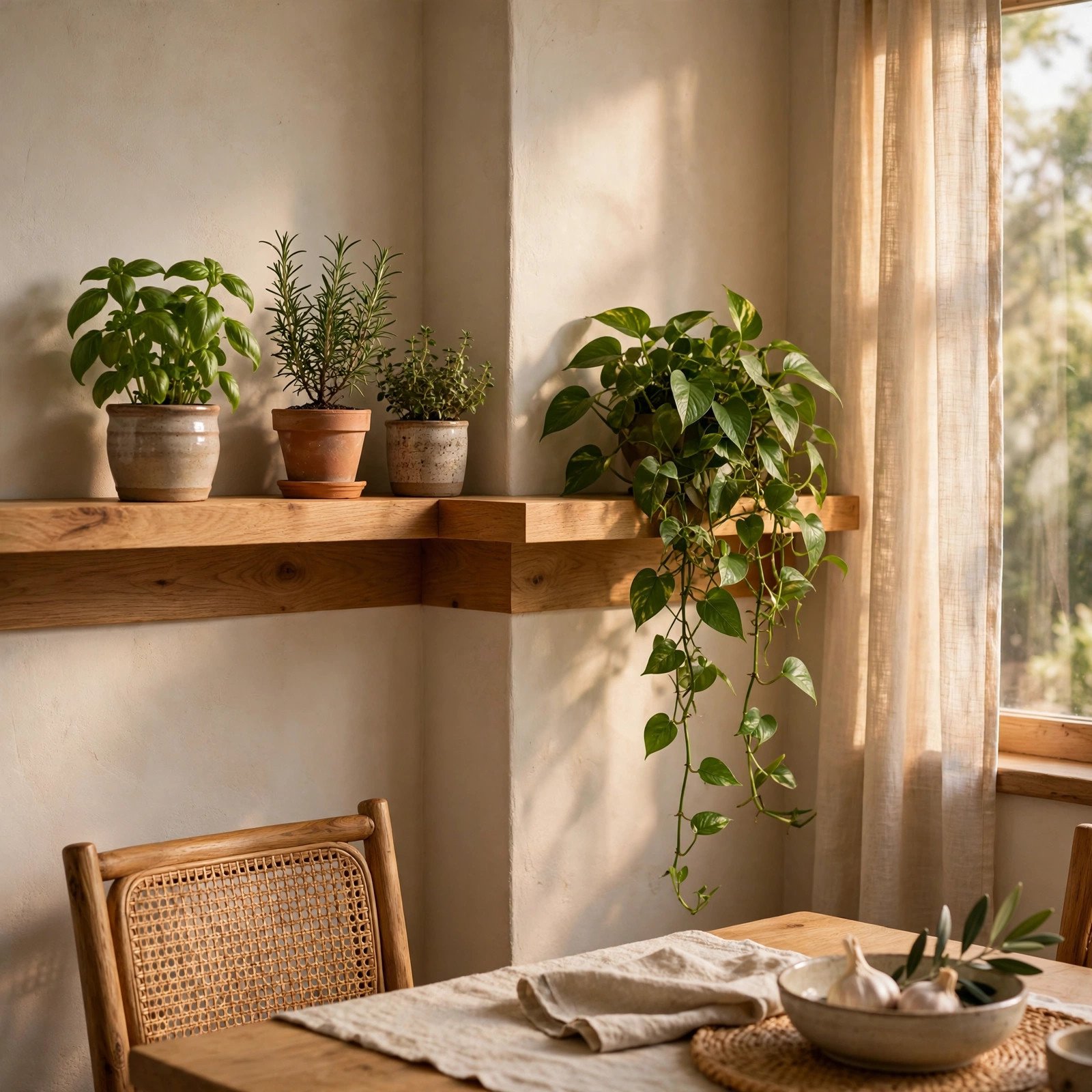
Plants bring life, color, and freshness to a dining room in a way no other decor element can. A large plant in the corner — a fiddle leaf fig, a monstera, or a tall snake plant — fills empty floor space and adds a natural, organic focal point. Moreover, plants make the air feel cleaner and the room feel more alive during meals.
In particular, a small herb garden on the dining room windowsill is both decorative and practical. Fresh rosemary, thyme, and basil look beautiful in terracotta pots. According to Homes & Gardens, combining greenery with mirrors in a dining room amplifies natural light and creates a more open, energizing atmosphere for shared meals.
One large architectural plant in the dining room corner creates far more visual impact than several small plants scattered across the space. Go big with one statement plant rather than many small ones.
- Place one large plant — a fiddle leaf fig or monstera — in an empty dining room corner to add a natural focal point and fill dead floor space beautifully.
- Grow a small herb garden on your dining room windowsill in terracotta pots. It looks beautiful and gives you fresh herbs to use during cooking.
- Choose plants with interesting leaf shapes like monstera or bird of paradise for maximum visual impact in a dining room with minimal furniture.
Use Wall Art to Add Character and Color to Your Dining Space
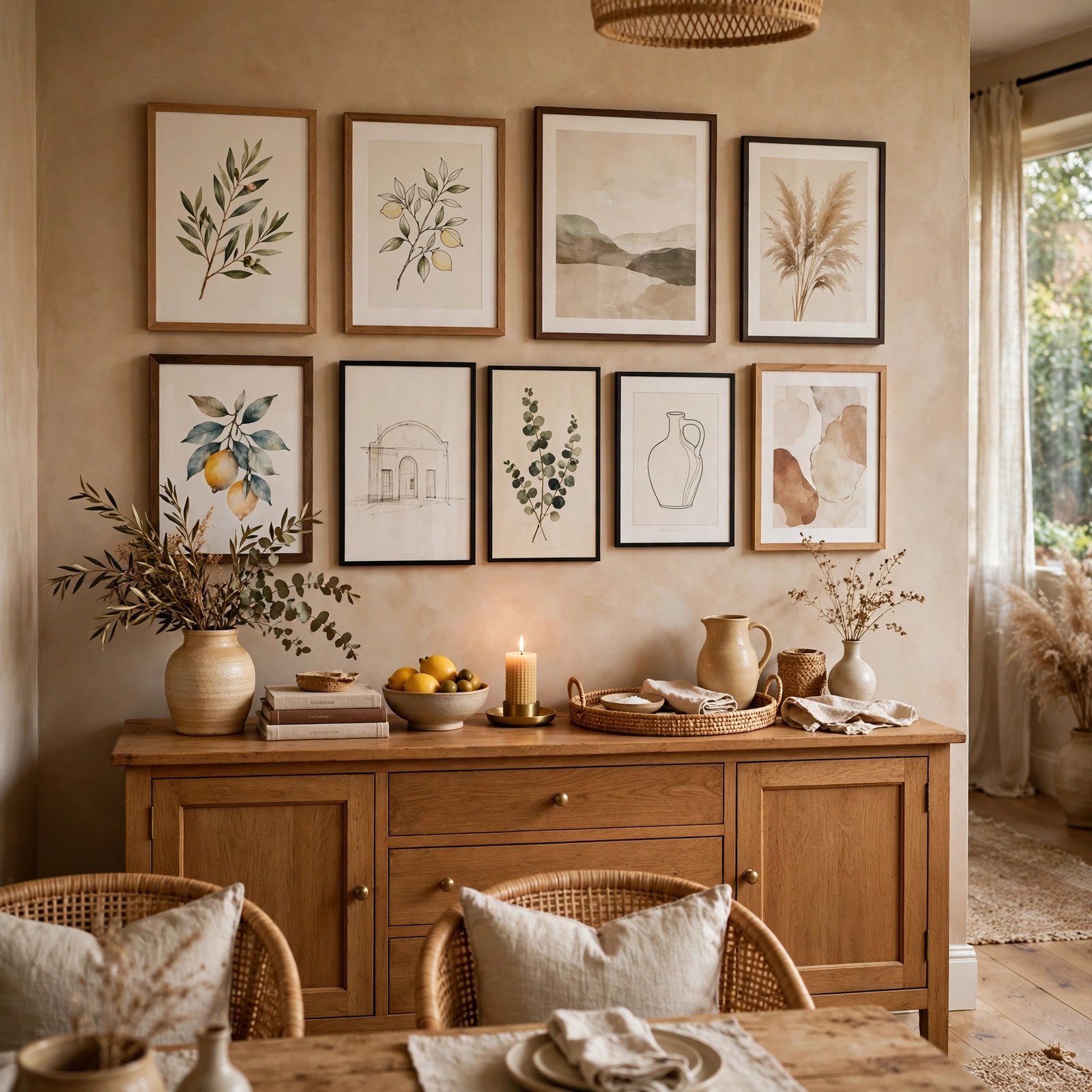
Blank dining room walls are a missed opportunity. Art adds color, personality, and a sense of intention to the space. A gallery wall above a sideboard, a single large statement print, or a collection of framed botanical illustrations all bring warmth. They add visual interest to a dining room that might otherwise feel plain.
For more ideas on creating beautiful and impactful wall displays, explore these living room decor ideas. Many of these approaches translate perfectly into a dining room setting. Similarly, a large mirror above the sideboard reflects light. It makes the dining room feel significantly larger and brighter during both day and evening meals.
Hanging one large piece of art at eye level above the sideboard is more impactful than filling every wall with smaller prints scattered without intention. Restraint and scale always win in dining room wall styling.
- Hang one large statement art print at eye level above your dining room sideboard to create a bold, anchored focal point without overcrowding the wall.
- Build a gallery wall using framed botanical prints, family photos, and abstract art in matching thin black or natural wood frames for a curated look.
- Place a large round or arch mirror above your sideboard to reflect light, visually expand the dining room, and add a sculptural decorative element.
Style Your Sideboard as a Beautiful Serving and Display Area
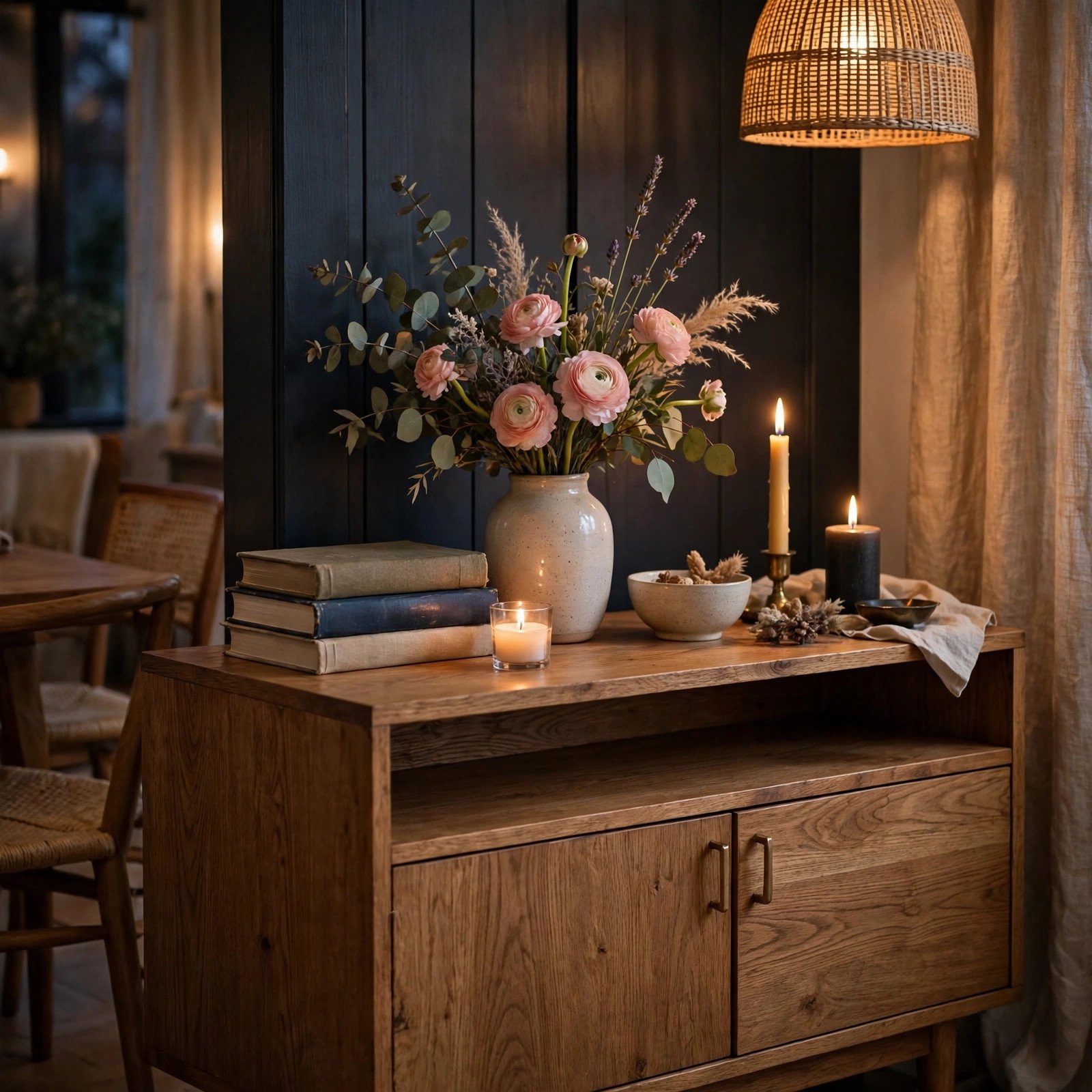
A sideboard is one of the most hardworking pieces of furniture a dining room can have. It provides storage, a surface for serving food during gatherings, and a display area that anchors the dining room’s decorative scheme. Therefore, choose a sideboard in a material that complements your dining table — matched wood tones or complementary finishes both work beautifully.
What’s more, styling your sideboard well adds an entire decorative layer to the room. Group a candle, a small plant, a stack of books, and a beautiful ceramic bowl on the surface. Keep it edited — three to five objects maximum. A well-styled sideboard does as much decorative work as a gallery wall. It also holds your best tableware and serving pieces.
Beyond that, during gatherings, clear the sideboard surface slightly and use it as a buffet or drinks station. This is one of the most practical hosting upgrades you can make in any dining room.
- Style your sideboard with a maximum of five objects — a candle, a plant, a vase, a bowl, and stacked books — for a clean, curated display.
- Use your sideboard surface as a drinks or dessert station during gatherings to free up dining table space and create a natural flow for guests.
- Choose a sideboard with drawers and cupboards rather than open shelving so everyday clutter stays hidden and the dining room always looks polished.
Paint an Accent Wall to Add Drama and Depth
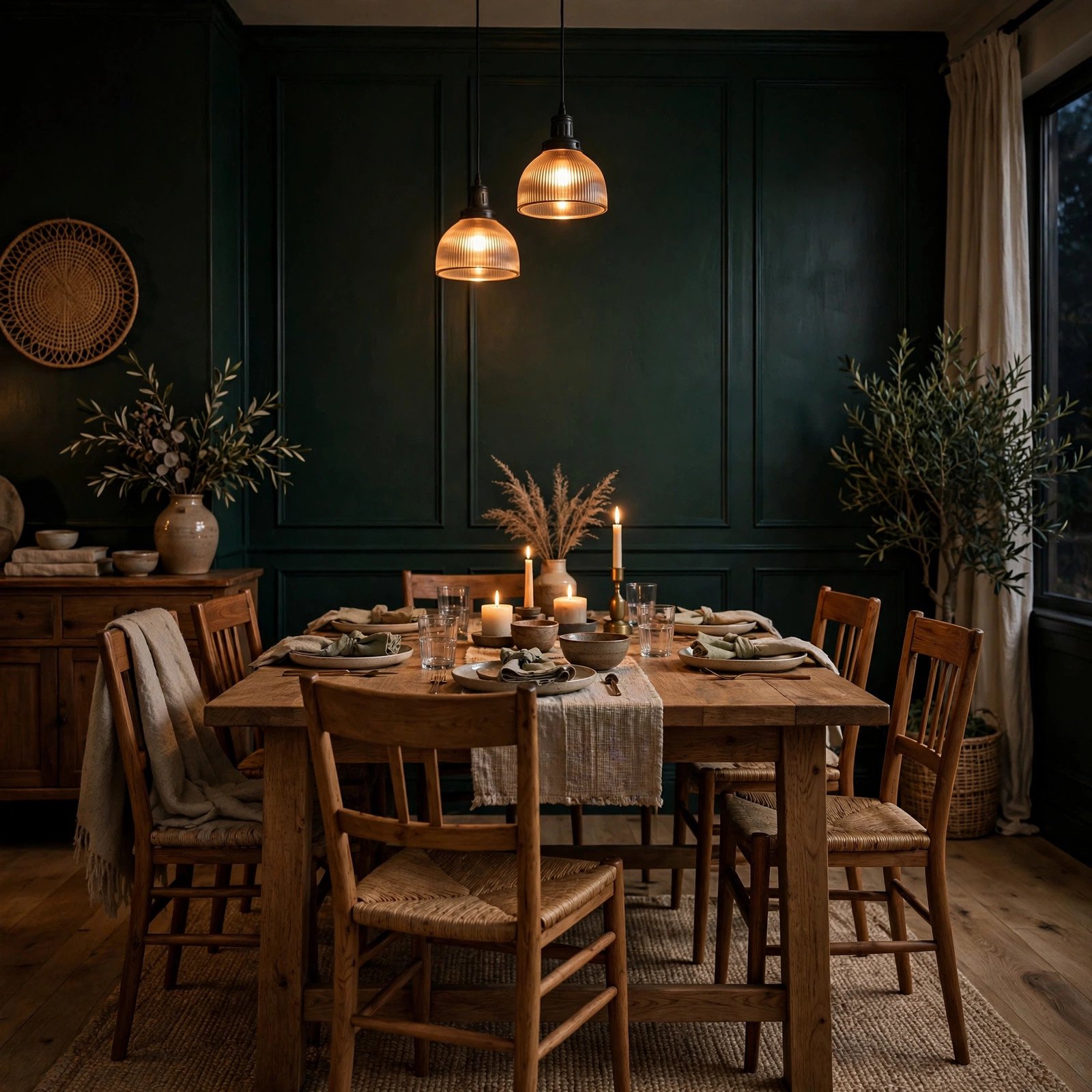
A bold accent wall is one of the fastest ways to transform a dining room from plain to dramatic. Deep, rich colors like forest green, navy, terracotta, or charcoal work particularly well in dining rooms. They create an intimate, enveloping atmosphere that makes the room feel cozy and special — especially by candlelight in the evening.
Moreover, the wall behind the dining table is the natural choice for an accent wall. It frames the table and creates a visual backdrop that makes your centrepiece and lighting look even more intentional. A deep green or terracotta accent wall in a dining room is one of the most impactful single paint decisions you can make in any home.
In addition, dark accent walls pair beautifully with natural wood furniture and warm brass or gold hardware. The contrast between deep color and warm natural materials creates a luxurious, magazine-worthy dining room aesthetic.
- Paint the wall directly behind your dining table in a deep, rich tone — forest green, terracotta, or navy — for maximum dramatic impact.
- Pair a dark accent wall with warm brass pendant lights and natural wood furniture to create a rich, layered, and luxurious dining room atmosphere.
- Test your chosen accent wall color at different times of day before committing. Deep colors look very different in morning light versus evening candlelight.
Add Curtains and Soft Furnishings for Acoustic Warmth
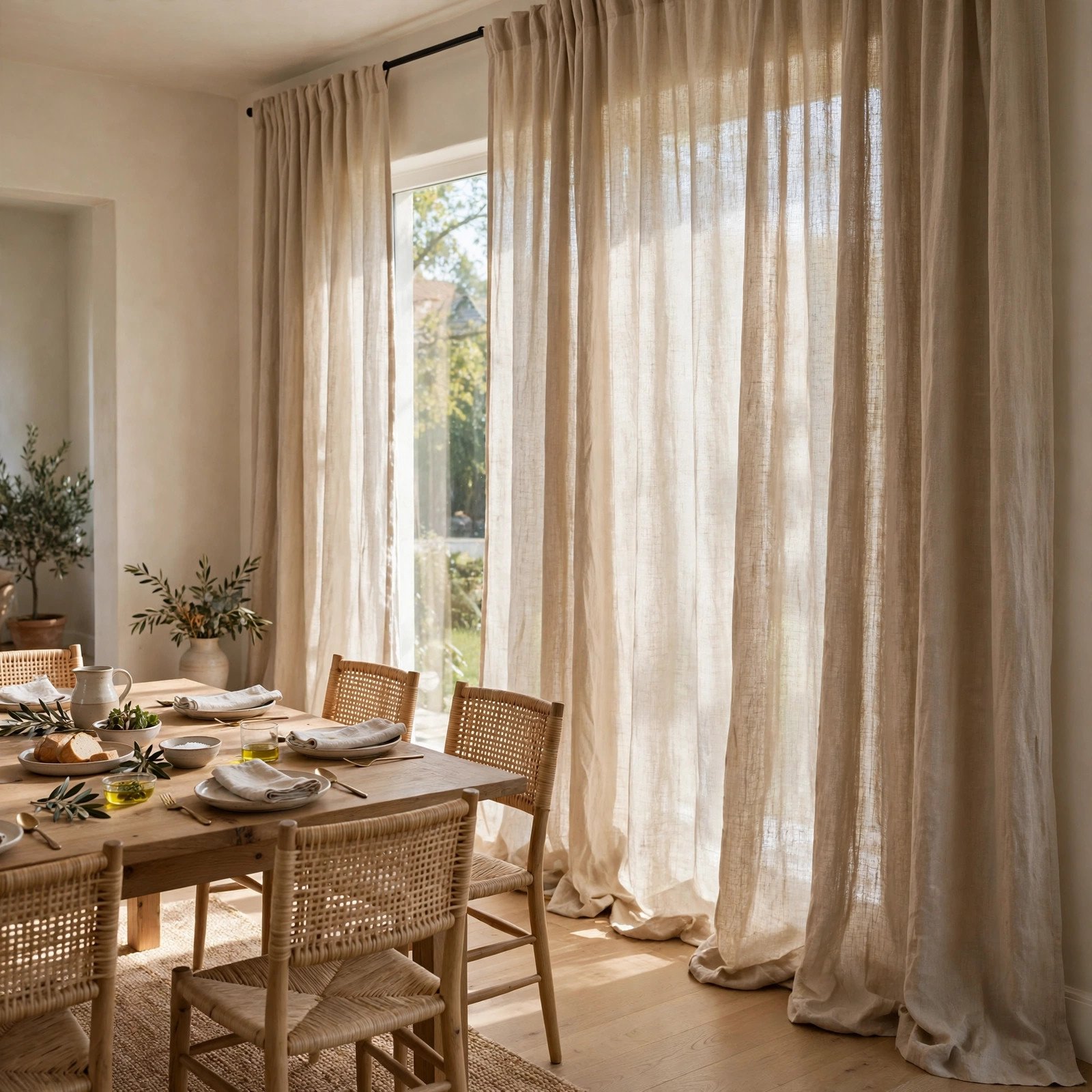
Hard surfaces make dining rooms noisy. A table, chairs, and a tiled or wooden floor create an echo that makes conversation during large gatherings feel tiring. Furthermore, adding soft furnishings — curtains, a rug, chair cushions, and even a fabric pendant shade — absorbs sound and makes the dining room acoustically warmer and more pleasant.
Therefore, floor-to-ceiling linen or velvet curtains are one of the most elegant additions to a dining room. They add height, softness, and a sense of occasion. They also help with temperature regulation in both summer and winter. Hanging curtains from ceiling height — even above the window frame — makes your dining room feel significantly taller and more luxurious.
In addition, choose curtains in warm, earthy tones — linen, oatmeal, warm white, or dusty sage — to complement a natural, inviting dining room palette and filter light beautifully throughout the day.
- Hang curtain rods as close to the ceiling as possible. Let curtains pool slightly on the floor for a luxurious, full-height window treatment effect.
- Choose heavyweight linen or velvet curtains in warm neutral tones to add sound absorption, temperature regulation, and visual softness to your dining room.
- Use sheer underlayer curtains with a heavier outer panel to control light beautifully — sheer during the day, heavy panels drawn in the evening for intimacy.
Personalize Your Dining Room Ideas With Meaningful Decor Details
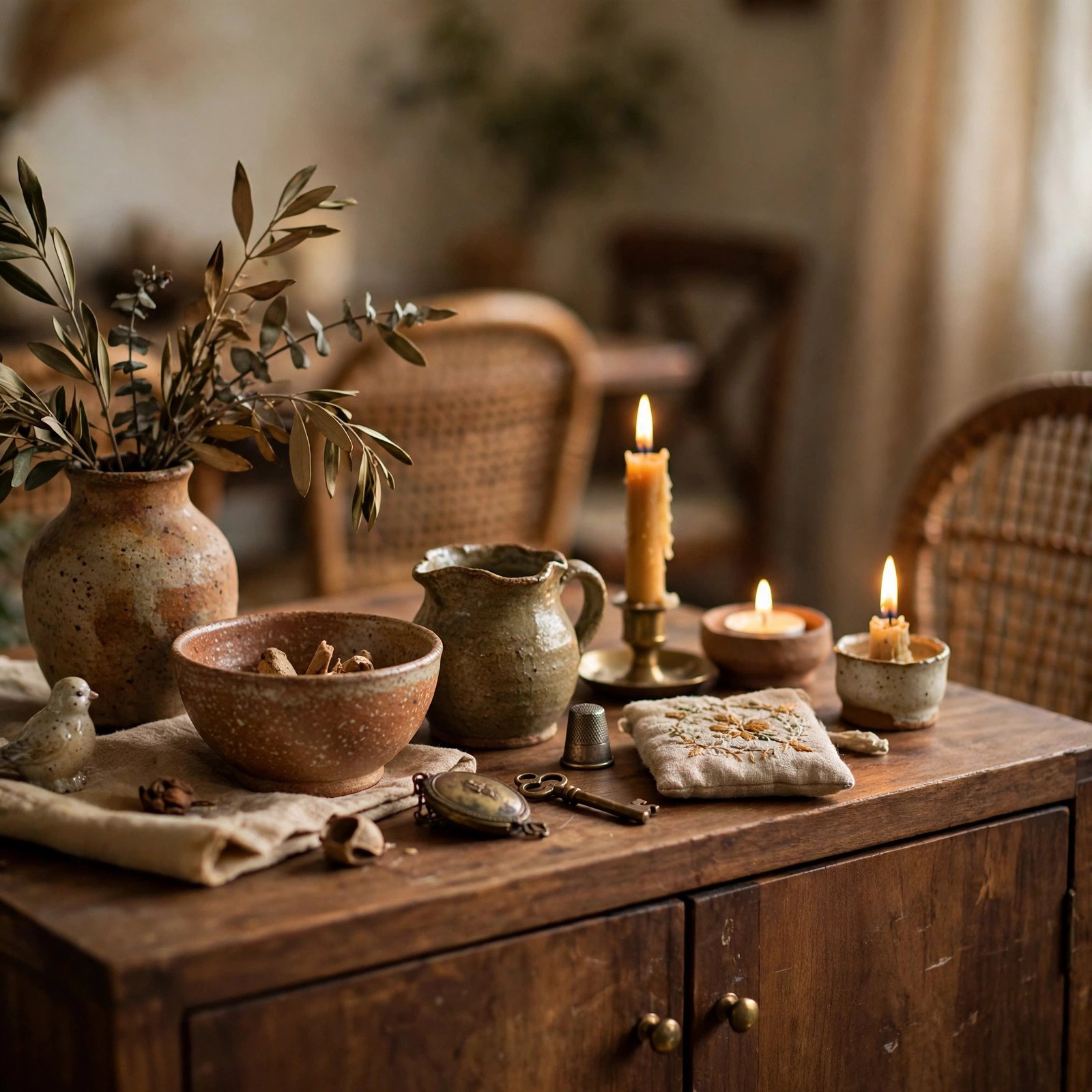
The most memorable dining rooms have a personal quality that no showroom can replicate. Handmade ceramics, family heirlooms, a beloved piece of art, or objects collected from travels add soul. These details make a dining room feel like it belongs to someone rather than belonging to a catalog. This is the final and most important layer of any great dining room design.
In particular, a collection of handmade or vintage ceramics on a shelf or sideboard adds warmth and authenticity. No two pieces are the same. Furthermore, mismatched vintage glassware in amber, green, and clear glass makes every table setting feel collected and personal. Authentic boho dining room style comes from collecting objects that genuinely mean something — not from buying a matching set.
As a result, your dining room becomes a true reflection of who you are. Every gathering held in that space carries your personality, your story, and your warmth. That is the heart of every truly great dining room.
- Display handmade or vintage ceramics on your sideboard or open shelf. The imperfections and variation make the dining room feel warm and authentic.
- Use mismatched vintage glasses in amber, green, and clear glass at your table settings for a charming, collected look that guests always notice and love.
- Choose one meaningful object — a travel souvenir, a family heirloom, or a handmade piece — to display prominently in your dining room as a conversation starter.
Frequently Asked Questions
What size dining table do I need for a family of four?
A table that is 120 to 150cm long is ideal for a family of four. This gives everyone comfortable elbow room and leaves space for serving dishes in the center. If you host guests often, consider a 150 to 180cm extendable table that can grow with your needs.
How do I make a small dining room feel bigger?
Use a round table instead of a rectangular one. Rounded edges take up less visual space and allow easier movement around the room. Add a large mirror to one wall to reflect light and depth. Choose light wall colors and keep furniture legs visible by avoiding fully skirted chairs that visually block the floor.
What is the best color to paint a dining room for a cozy atmosphere?
Warm, earthy tones create the coziest dining room atmospheres. Deep terracotta, warm cream, sage green, and dusty taupe all work beautifully. If you want drama and intimacy, a deep forest green or charcoal accent wall on the wall behind the table creates a stunning, moody backdrop for evening gatherings.
These Dining Room Ideas Will Make Every Gathering Feel Special
From choosing the right table to layering your lighting, these ideas cover the essentials. Add meaningful personal touches and bold accent walls. You will have everything you need to create a space that is as beautiful as it is welcoming. The best dining rooms are not the most expensive ones — they are the most personal, warm, and intentionally designed. Start with one idea today and build a dining room your family and guests will never want to leave.
Which dining room idea is your favorite? Let us know in the comments below! 👇
If you found these ideas helpful, share this post with your friends and save it for later!
